
The Masks We Learn to Wear to Survive
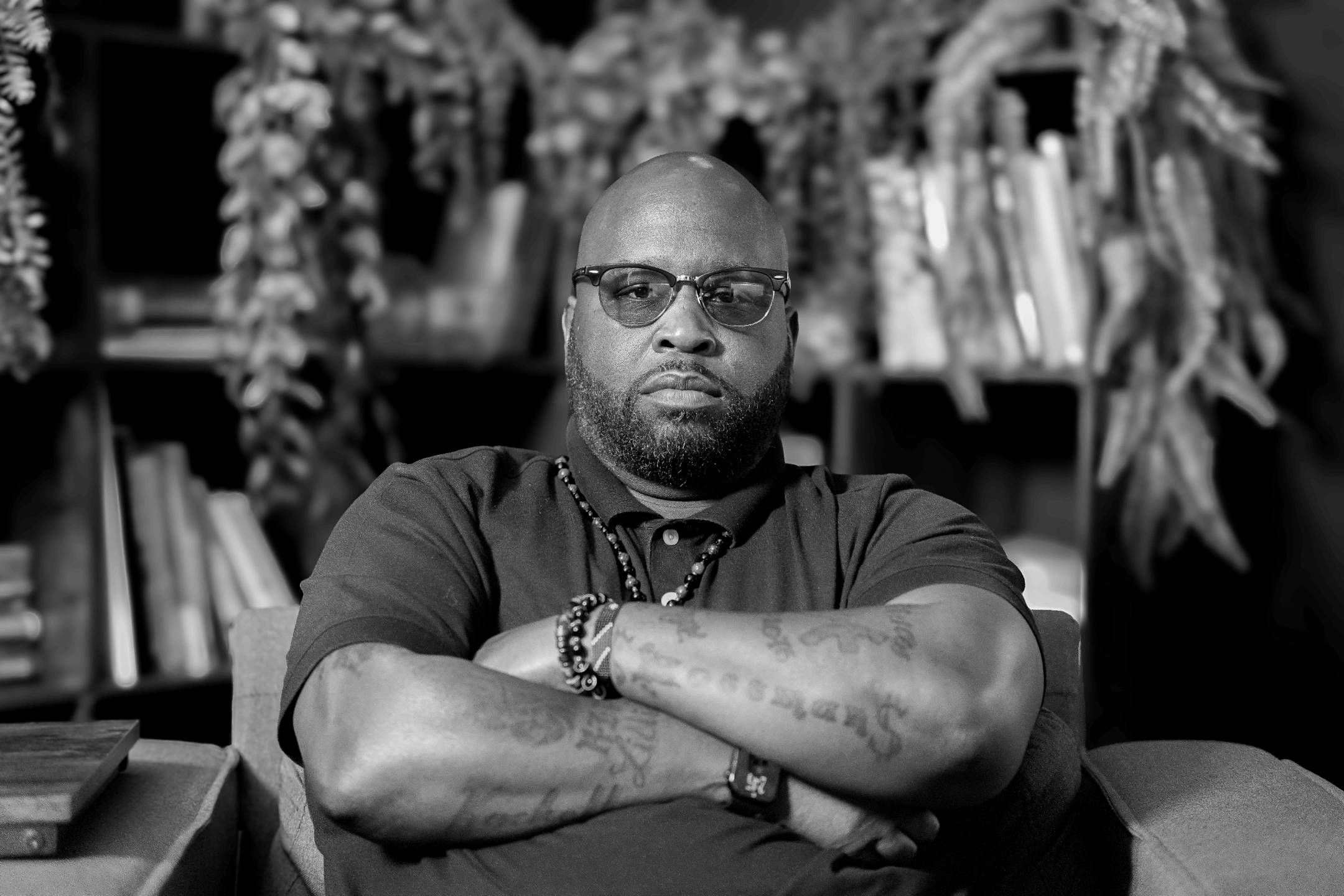
Sherman Wells
When Sherman Wells tells you that selling crack cocaine once felt normal, it is easy to let that sentence become the story.
It isn't.
Before Sherman was selling drugs, before running from police, before jail cells and charges, there was a child trying to understand what kind of world he had been born into.
Sherman describes a childhood marked by neglect, physical abuse, sexual abuse, instability, hunger, and being left in environments where he did not always know whether the adults around him were safe. There were experiences he says he rarely spoke about, partly because he learned early that speaking did not necessarily mean someone would believe him. Eventually, silence became familiar. So did pain.
Then his environment changed.
Foster care introduced Sherman to different experiences. There was discipline and structure. There was church. There were adults teaching him responsibility. There were also seemingly ordinary moments, like a foster brother taking him outside and teaching him how to catch a baseball. Sherman remembers that moment because ordinary childhood experiences did not always feel ordinary to him.
Then the environment changed again.
By his teenage years, Sherman found himself surrounded by another kind of normal. He watched people use drugs. He watched people sell them.
He saw people die young. Eventually, he began selling crack cocaine himself, including to members of his own family. Looking back, Sherman repeatedly returns to the same explanation: at the time, this was simply what life looked like.
But something else was happening underneath it.
Sherman says the camaraderie of the neighborhood made him feel better. There were people to talk to. There was belonging. There was even authority in a life where he had once experienced profound powerlessness.
Listening to him describe these different chapters, I kept thinking about how many versions of Sherman had already existed before he was old enough to understand what those versions were protecting.
The traumatized child. The quiet child. The church boy. The foster child learning structure. The teenager learning the streets. The drug dealer.
And somewhere underneath all of them was pain that had never simply disappeared.
So when we call this A Former Crack Dealer's Story, there is another question worth asking.
Who was Sherman underneath the person he learned how to become?
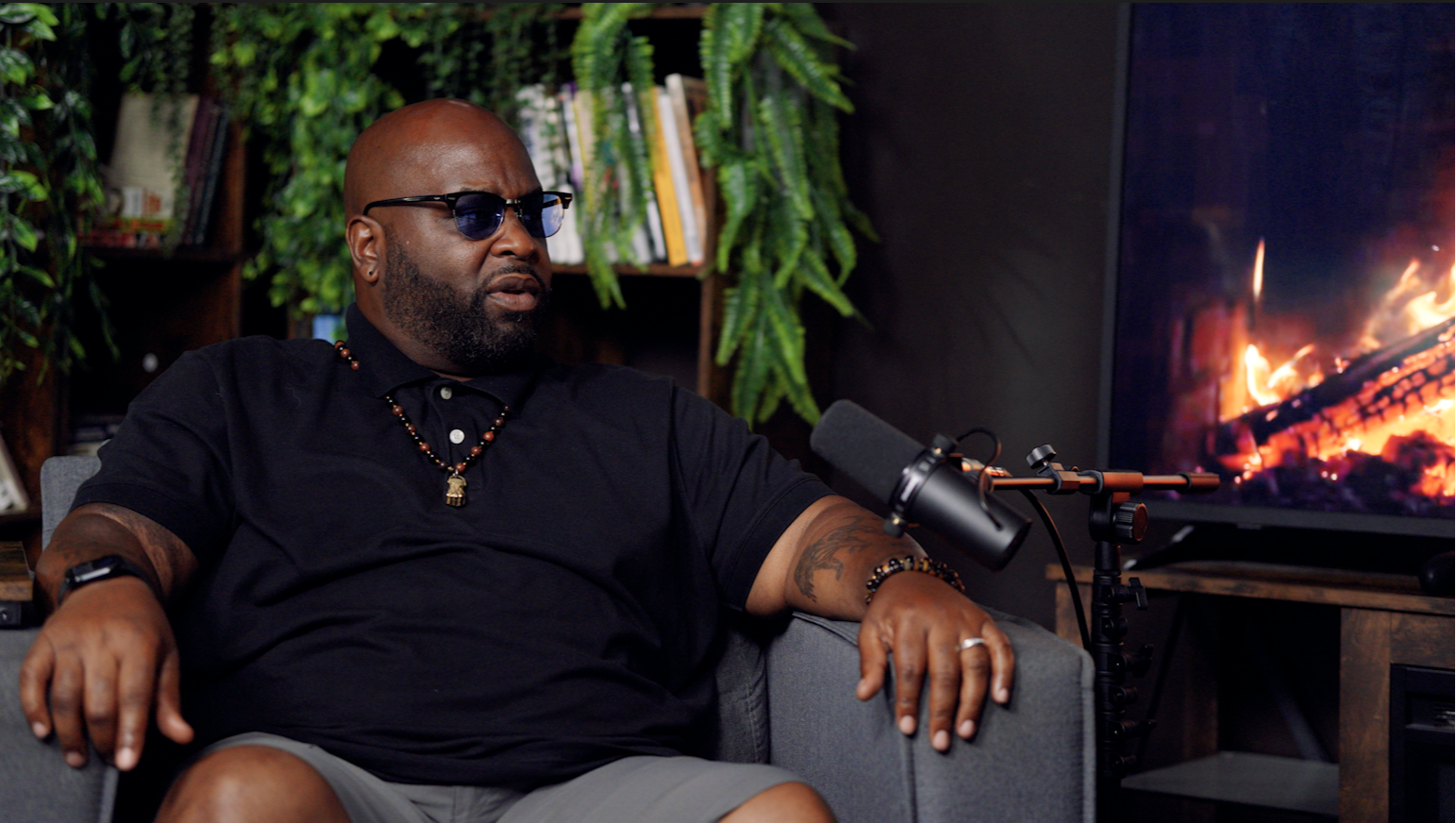
The Room We Clean: The Mask
When you hear the word masking, you might imagine someone smiling when they are hurting.
Sometimes it is much bigger than that.
Sometimes the mask becomes an entire version of you.
Maybe you learned to become quiet because speaking created problems. Maybe you became funny because humor kept people from asking deeper questions. Maybe you became tough because being afraid felt dangerous. Maybe you became successful because achievement gave you something you could control. Maybe you became the person everyone could depend on because needing someone yourself never felt particularly safe.
Eventually, you stop thinking of these things as adaptations.
You just say, This is who I am.
That is what Sherman's story made me think about.
He describes becoming withdrawn after painful childhood experiences. He did not want to talk to people, and he began distrusting adults. Years later, he found something very different in the neighborhood: camaraderie, connection, and authority.
I don't think we should reduce that complexity into a simple equation where trauma automatically leads someone toward drugs, violence, or criminal behavior. Human beings are far more complicated than that.
But Sherman's story does invite us to consider what happens when an environment gives us a version of ourselves that feels easier to inhabit than the pain underneath it.
Sometimes we don't process pain.
We build a life around it.
We put the memories in a box. We learn which emotions are acceptable. We figure out what gets us belonging. We discover what makes us feel powerful, useful, wanted, invisible, respected, or safe. Then we keep becoming that person because, for a while, that person works.
The problem is that the environment can change long before the mask does.
Sherman talks about struggling to express emotions for years. He describes being able to remain calm or become intensely angry, but vulnerability was much harder. Even when he tried sharing pieces of his childhood with someone, having that information later used against him reinforced the idea that disclosure was dangerous.
Think about that in your own life.
Which version of you learned how to survive your childhood?
Which version learned how to survive rejection?
Which version shows up when somebody gets too close?
Which version walks into work?
Which version enters your relationships?
And when was the last time you asked whether you still need all of them?
There are rooms we clean because they are obviously messy. Then there are rooms we have lived in for so long that we stopped noticing what was piled inside them.
A mask can become one of those rooms.
What makes it complicated is that the mask may not be completely fake. It may contain real parts of you. Your toughness might be real. Your independence might be real. Your ambition, humor, confidence, anger, composure, or ability to handle difficult situations may all genuinely belong to you.
But they may also have been shaped in environments that required something from you.
That is why removing the mask isn't always as simple as deciding to “be yourself.”
Sometimes you have to figure out who yourself is underneath everything you learned to become.
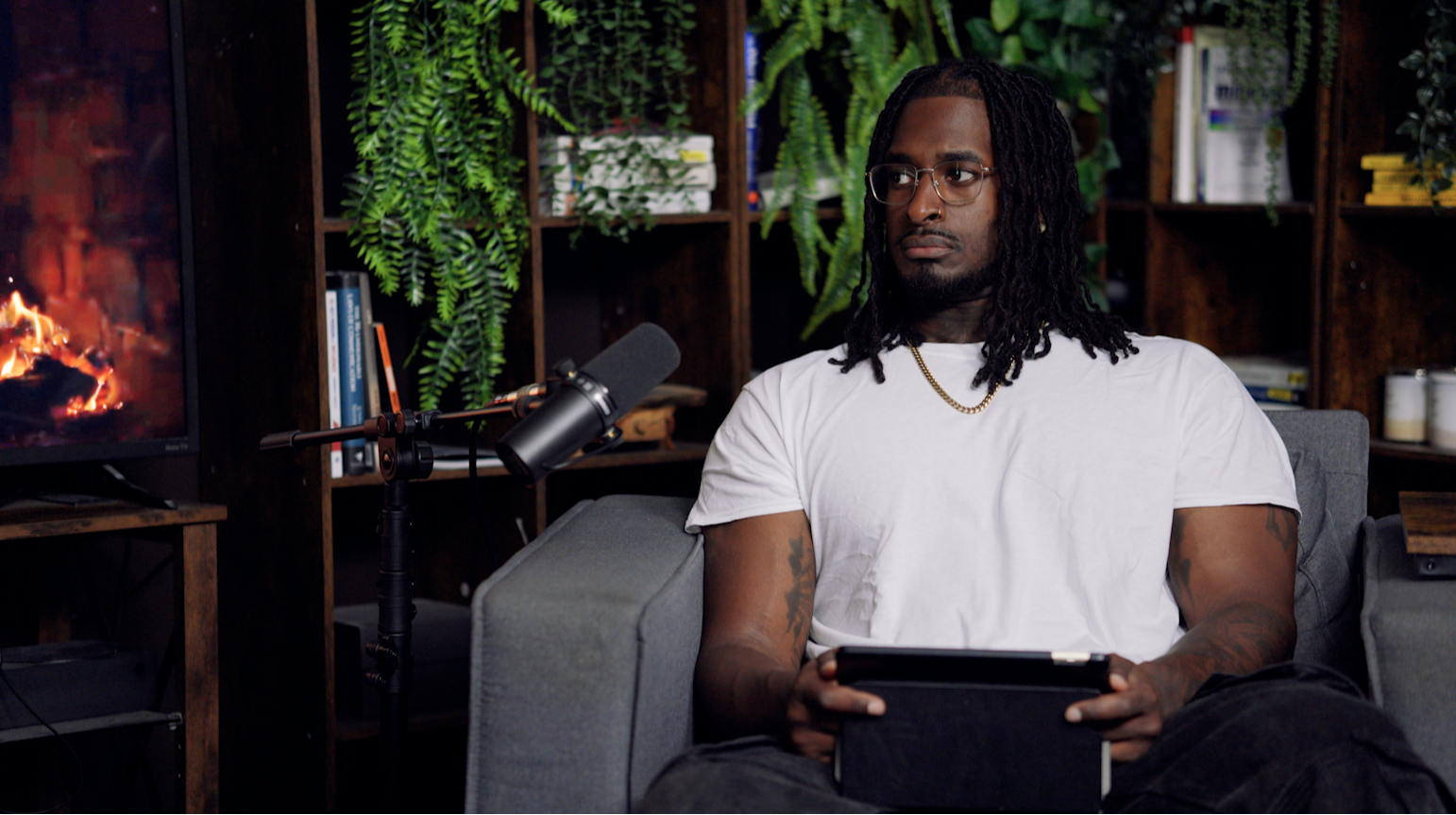
Therapist Perspective
As I listened to Sherman talk, one thing kept standing out to me: sometimes what we call personality is actually adaptation that has been practiced for a very long time.
That does not mean every personality trait comes from trauma. It also does not mean that because someone has experienced trauma, every decision they make afterward can be traced back to it. Human behavior is more complicated than that.
But our environments do teach us things.
They teach us what feels safe. They teach us what emotions we are allowed to show. They teach us who can be trusted. They teach us what happens when we speak. They teach us what happens when we cry. They teach us whether vulnerability brings comfort, punishment, rejection, embarrassment, or nothing at all.
Eventually, we can stop recognizing those lessons as lessons.
They just become how we live.
Sherman describes reaching a point in childhood where experiences most people would recognize as deeply concerning had become normal to him. He had been exposed to abuse, violence, instability, and people disappearing from his life so frequently that he assumed other people were living some version of the same reality. It was not until adulthood, and conversations with people whose childhoods looked very different, that he began recognizing how abnormal some of those experiences actually were.
That matters.
Familiarity and safety are not the same thing.
Sometimes we return to behaviors, relationships, environments, or emotional patterns not because they are healthy, but because we understand how to function inside them. There can be predictability in the familiar, even when the familiar hurts.
Another part of Sherman's story that caught my attention was his relationship with emotion. During our conversation, I asked whether his emotional range had historically existed somewhere between calm and, essentially, "you got me messed up." He said that description was pretty accurate. He explained that expressing emotion came much later and that, for a long time, much of what was happening internally remained shut down.
From my perspective as a therapist, this is where the mask can become difficult to recognize.
If sadness has never felt safe, anger may become easier to access.
If fear once made you feel powerless, toughness may feel safer.
If asking for help repeatedly resulted in disappointment, extreme independence can start looking like a personality trait.
If vulnerability has been weaponized against you, silence can begin feeling like wisdom.
The behavior may make sense when you understand the environment in which it developed.
The problem is that a protective strategy can outlive the environment that created it.
Sherman gives us a small but meaningful example when he talks about sleep. He describes childhood experiences of being disturbed and hurt while sleeping, and how being awakened later in life could trigger anger. When his wife learned the history behind that reaction, Sherman says she approached him differently. Instead of aggressively shaking him awake, she would come in and kiss him good morning.
The environment changed.
The relationship changed.
The experience changed.
And Sherman was given an opportunity to experience something familiar in a different way.
That does not erase what happened before. It does show us why safe relationships can matter so much.
There is another side of the mask that deserves attention too: shame.
Sherman describes having opportunities where people noticed something in him, including entertainment and music, but pulling away from attention. His explanation wasn't simply that he disliked being in the spotlight. He connected some of that avoidance to embarrassment about his past and fear that attention might eventually lead people toward the parts of his story he did not want them to know.
Sometimes people are not only afraid of failing.
They are afraid of being seen.
Because being seen means someone might look closer.
And if you have spent years carefully boxing up certain parts of yourself, closeness can feel threatening even when the person approaching you has good intentions.
What Do You Do With the Mask?
If you're recognizing yourself in some of this, I don't think your first question has to be, How do I get rid of this version of myself?
I would start somewhere else.
What did this version of me learn to protect?
Pay attention to where different versions of you appear.
Who makes you guarded?
Where do you feel like you have to perform?
What makes you immediately angry?
Where do you become quiet?
Who gets the successful version of you but never the struggling one?
Which relationships allow you to say, "That hurt me," without immediately feeling weak, embarrassed, or defensive?
And instead of condemning yourself for what you find, get curious about it.
There is a meaningful difference between asking, What's wrong with me? and asking, When did I learn that I needed to respond this way?
You may also need to develop language for emotions that have spent years being translated into something else. Anger might actually have hurt underneath it. Withdrawal might be carrying fear of rejection. Constant achievement might coexist with insecurity. Control might be covering uncertainty.
That does not mean you should assume every behavior has some hidden traumatic explanation. It means you can become curious enough about yourself to stop living entirely on autopilot.
Therapy can be particularly useful here. If experiences from your past continue affecting your relationships, emotional regulation, trust, intimacy, sleep, work, parenting, or ability to feel safe, sitting with a licensed mental health professional can give you space to understand what happened, what you learned from it, and what continues to show up today.
The goal isn't necessarily to destroy the mask.
Sometimes you need to understand it.
There may be parts of that version of yourself worth keeping. The independence you developed might have become genuine competence. The awareness you needed to survive difficult environments may have made you observant. The toughness you developed may have become perseverance.
Healing does not require you to hate every version of yourself that helped you get here.
It can mean developing enough awareness and flexibility that you have a choice about who you need to be now.
When Someone You Love Is Wearing the Mask
There is another person I want to talk to for a moment.
Maybe you're reading this and thinking about somebody else.
You can see the walls. You recognize the anger. You know they avoid certain conversations. You notice how uncomfortable they become when emotions get too close. Maybe you've even caught glimpses of the person underneath all of it.
You cannot force somebody to take their mask off.
And trying to rip it away may only give them another reason to put it back on tighter.
You can, however, think about the kind of environment you're creating around them.
Don't force disclosure. Someone telling you one part of their story does not mean they owe you every detail.
When they do share something difficult, listen before interrogating. You can be curious without requiring someone to prove why they feel the way they feel.
And please, do not weaponize vulnerability.
Sherman describes sharing part of his childhood sexual abuse with someone he was dating, only to later have that information thrown back at him. His response was essentially to stop sharing.
That response makes sense.
When someone hands you something they have spent years protecting and you use it against them during an argument, make it into a joke, share it with other people, or use it as ammunition, you may reinforce the exact belief they were beginning to question:
Maybe it isn't safe for people to know me.
Support can look much quieter than that.
Ask what helps.
Be consistent.
Respect boundaries.
Listen.
Allow someone to have emotions without immediately trying to fix them.
Encourage professional support when it is needed without positioning yourself as their therapist.
And remember that compassion does not require tolerating harmful behavior. Understanding where someone's anger, avoidance, or defensiveness may come from does not mean allowing yourself to be mistreated. Pain can provide context for behavior without becoming permission to hurt other people.
Sometimes loving someone behind a mask means creating enough safety that they don't have to perform in front of you.
Sherman's wife appears repeatedly throughout his story as someone who helped him experience parts of life differently. Sherman credits her with showing him a kind of love he says he had not previously received, helping him learn to express emotion, understanding pieces of his history, and challenging him to make decisions about the life he wanted to live.
She could support him.
She could not rewrite his childhood.
Those are two different things.
Ultimately, that may be one of the most important distinctions in this entire conversation.
Healing does not require pretending the previous versions of you never existed.
The frightened child existed.
The angry version existed.
The quiet version existed.
The version who desperately wanted somewhere to belong existed.
For Sherman, the drug dealer existed too.
Those chapters belong to his story without any single chapter being entitled to define the entire person.
Near the end of our conversation, Sherman talks about becoming the "boss" of himself. Not because of a job title or because he believed himself superior to anyone else, but because the phrase came to represent taking ownership of his life. He describes refusing to allow his past to determine who he is and trying to reclaim the person he believes he was born to be.
I think there is something worth sitting with there.
Maybe cleaning this room isn't about discovering that every version of you except one was fake.
Maybe it is finally understanding why those versions existed.
What they protected.
What they cost you.
What they gave you.
And which ones you no longer need to become just to feel safe.
There is much more to Sherman's story than his years selling crack cocaine, just as there is much more to him than what happened during his childhood. Our conversation moves through incarceration, relationships, faith, grief, responsibility, community, purpose, and the complicated process of becoming someone different without pretending the person you used to be never existed.
If something about Sherman's story made you recognize one of your own masks, I encourage you to experience the full conversation. There are parts of his story that cannot be understood through the title alone.
When you clean your room, you can change your life.
Payton Hogan MS, LIMHP