
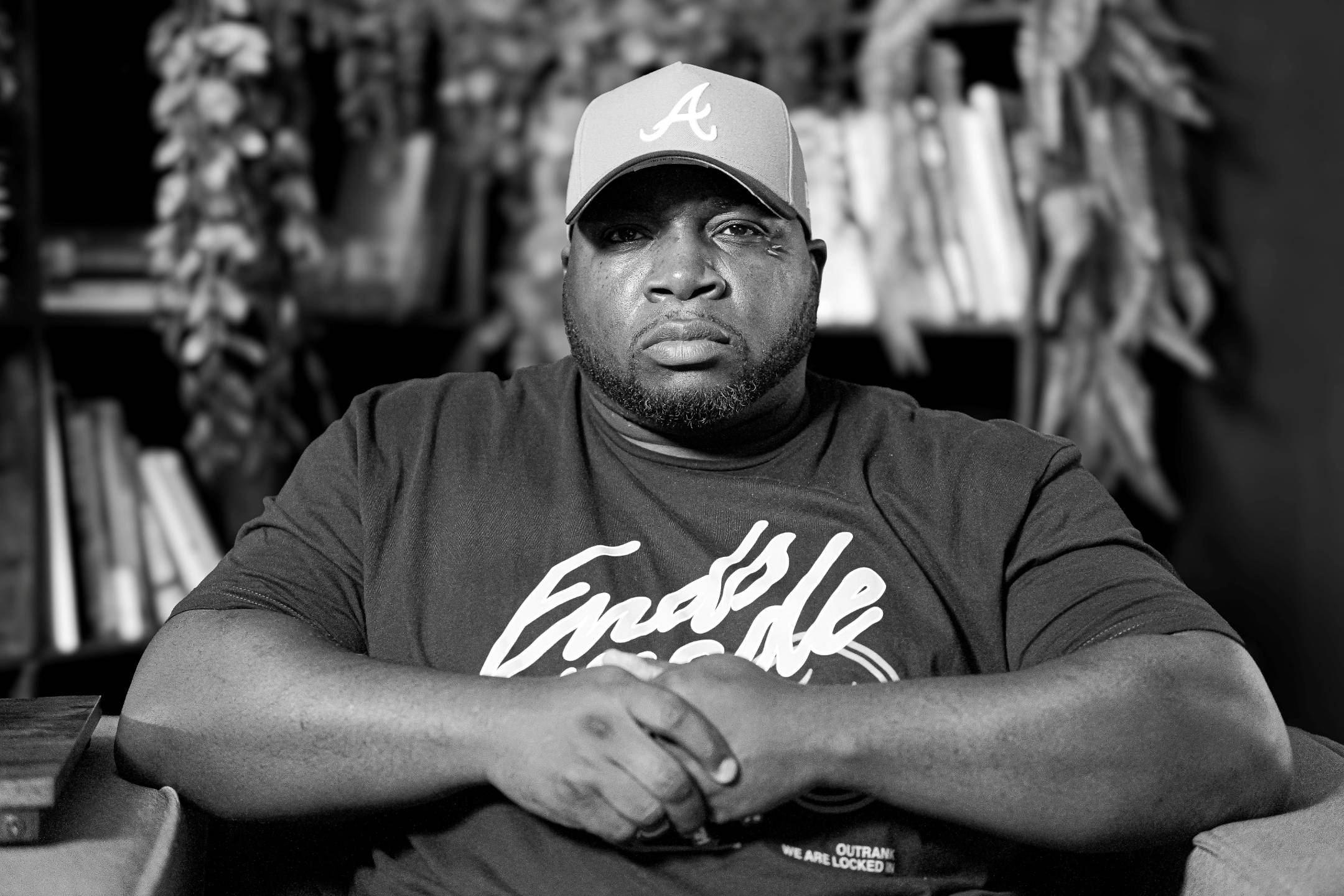
I Never Learned To Grieve
Chrome Louis
April became a blur for Chrome Louis.
First came the call about his younger brother. There had been a shootout with police, and Chrome was told his brother had shot himself. Before anyone confirmed how serious it was, Chrome remembers feeling something in his body telling him this time was different. He went to the hospital, where his family eventually learned his brother had died.
Then, while the family was still trying to process that loss and make funeral arrangements, another call came. Chrome's older cousin, a man he remembers as one of the first examples of a protector and superhero in his family, had stopped breathing. He went into cardiac arrest and remained on life support before eventually passing away.
Two deaths. Two sides of the family. And very little time between them.
But Chrome didn't stop.
For nearly two decades, he has worked in community violence intervention. He is accustomed to being the person people call when families are hurting, violence erupts, young people need guidance, or somebody needs to step into the middle of a difficult situation. Even while his own family was grieving, that identity followed him into the hospital.
Chrome found himself coordinating, answering calls, interacting with community partners, helping family members, communicating with hospital staff, and trying to remain strong.
He calls it being the superhero.
The problem is that superheroes aren't supposed to fall apart.
As we talked, something became increasingly difficult to ignore. Chrome has experienced loss throughout his life. He has buried people he loved. He has witnessed violence. He has sat with grieving families. He has carried his own history while helping other people survive theirs.
And somewhere along the way, he became exceptionally good at continuing.
Pain became motivation. Loss created urgency. Grief became another reason to work harder.
Chrome told me, "I don't know if I grieved yet."
That sentence stayed with me because this conversation wasn't really about whether Chrome is strong. His life has already answered that question.
The question underneath our conversation was much harder:
What happens when you've spent your entire life learning how to survive, only to realize survival never taught you how to grieve?
Chrome doesn't have that answer yet.
Right now, he's standing at the crossroads trying to figure it out.
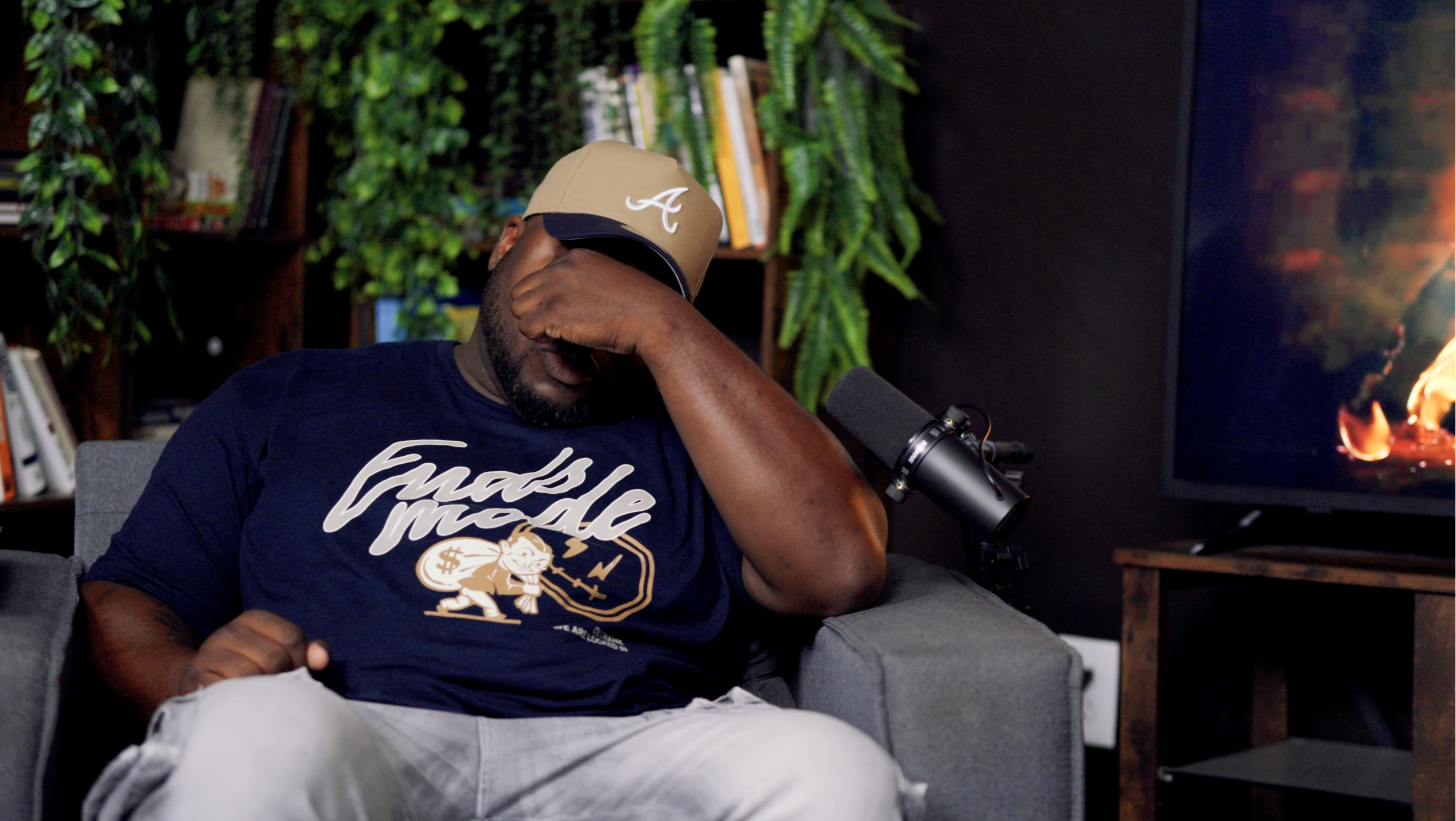
The Room We Clean: Unprocessed Grief
We tend to have an image of what grief is supposed to look like.
Crying. Staying in bed. Withdrawing from people. Falling apart.
But sometimes grief looks like going to work.
Sometimes it looks like answering every phone call, taking care of everybody else, starting another project, staying out late, scrolling until you're exhausted, or convincing yourself that you just need to keep moving.
You can be grieving and still be productive.
You can be hurting and still be the strongest person in the room.
You can even become so good at surviving loss that survival starts looking like healing.
That distinction kept coming up for me while talking with Chrome.
He described resilience as one of the defining qualities of his life. When something happens, he keeps going. When someone needs him, he shows up. When pain enters his life, he finds somewhere to put it.
And to be clear, that resilience has served him.
There are seasons of life when survival is exactly what gets us through. You might not have had the time, safety, support, or emotional language to process what happened. You simply did what was necessary to make it to tomorrow.
The problem comes when tomorrow arrives and your body is still living by yesterday's instructions.
Keep moving.
Don't stop.
Don't feel too much.
Handle it yourself.
Be strong.
Maybe your version of this room doesn't look like Chrome's. Maybe nobody would even know you're grieving because you've learned how to keep the room presentable.
But behind the door are losses you never really sat with. Conversations you never had. Goodbyes you didn't get to say. Anger you didn't know belonged to grief. Nights when everything became quiet enough for the thoughts to return.
Some rooms become messy because life happened faster than we could process it.
And sometimes we don't clean them. We simply learn how to walk around the clutter.
That's what makes unprocessed grief complicated. You can continue living. You can succeed. You can help people. You can laugh, love, build, work, parent, lead, pray, and show up for everyone around you while still carrying something you never learned how to put down.
Eventually, though, you may find yourself standing in the doorway of that room.
You know something is in there.
You know it has been affecting you.
You may even recognize that avoiding it is becoming exhausting.
But recognition and knowing what to do next are two very different things.
That's where Chrome seems to be in this conversation.
Not healed.
Not defeated.
Not suddenly equipped with all the answers.
Just aware that after spending so much of his life learning how to survive grief, he may finally have to figure out what it means to actually feel it.
Therapist Perspective
As I listened to Chrome talk, one thing kept standing out to me: we often celebrate people's resilience without asking what that resilience has required them to suppress.
There is nothing inherently wrong with being resilient. Sometimes resilience is exactly what gets you through the moments when falling apart does not feel like an option. But from my perspective as a therapist, I think there is an important difference between using resilience to move through something and using resilience so you never have to stop and feel it.
Part of what makes Chrome's story so layered is that he openly admits he never really learned how to do the second part.
He talked about growing up without someone consistently hugging him, wiping his tears, or telling him it was okay to cry, be afraid, or feel sad. Later in life, when violence and death became part of his experiences, he still did not necessarily have someone there helping him make sense of what was happening emotionally.
That matters.
We sometimes criticize ourselves as adults for struggling with emotions we were never taught how to experience safely as children. We say things like, "Why can't I open up?" "Why can't I let people help me?" or "Why do I shut down every time I start feeling something?"
But I think there is another question worth asking:
Where were you supposed to learn how to do this?
If your earliest experiences taught you that pain was something you survived rather than something you talked about, your instinct may still be to survive it.
For some people, that means shutting down.
For others, it means staying busy.
And sometimes it means becoming incredibly resilient.
That is where resilience and avoidance can begin looking very similar from the outside.
You keep working. You take care of your family. You answer the phone. You show up for everybody. You accomplish things. You help people. You might even feel better when you're doing it.
Chrome described helping people as something that genuinely brings him happiness. I don't want to take that away from him because I believe both things can be true. His service can be meaningful, and his service can sometimes give him somewhere to go when his own emotions become difficult to sit with.
That distinction matters for the rest of us too.
If you constantly need something to do whenever life gets quiet, it may be worth getting curious about what happens when you stop.
What thoughts show up?
What memories come back?
What emotions become harder to ignore?
Chrome talked about nighttime being one of the only times he finds peace because the phone stops ringing and the demands of his life become quieter. But he also described those same hours as a place where sadness, loneliness, and difficulty sleeping can show up.
Sometimes movement protects us from discovering how much we have actually been carrying.
And grief doesn't always announce itself by making you cry.
It can be much less obvious.
For some people, grief may coexist with irritability, emotional numbness, difficulty sleeping, withdrawal, trouble concentrating, anger, changes in patience, or simply feeling different without completely understanding why. None of those experiences automatically mean someone is grieving, and grief looks different from person to person. But when you've experienced significant loss, changes in how you think, feel, sleep, relate, or respond to people can be worth paying attention to.
This is also where Chrome's identity as the superhero becomes important.
When you spend years being the dependable person, being needed can slowly become connected to who you believe you are.
You're the fixer.
You're the protector.
You're the one people call.
You're the person who can handle it.
But being good at giving support does not automatically make you good at receiving it.
One of the most revealing things Chrome said during our conversation was that he knows human beings need one another. He gives love to people everywhere he goes. He helps strangers. He supports families. He pours into his community.
Then he acknowledged something much harder:
He doesn't always let that same love in.
That is a difficult contradiction to live inside. You can believe deeply in community while still believing, somewhere inside yourself, that when things get bad enough, you're ultimately going to have to save yourself.
So what happens when the superhero needs somewhere to fall apart?
This is why telling someone to "just slow down" isn't always as simple as it sounds.
When movement has helped you survive, slowing down can feel threatening. Silence removes distractions. Rest creates space. And sometimes that space puts you closer to emotions you've spent years learning how to outrun.
Chrome seems to understand that he needs to slow down.
What he doesn't know yet is exactly what happens when he does.
And maybe that is the crossroads.
If you recognize some of yourself in this story, learning how to grieve does not necessarily mean forcing yourself to cry or reopening every painful memory at once. It can begin much smaller.
It might begin with noticing what you do when difficult emotions appear.
It might mean becoming curious about why rest makes you uncomfortable.
It might mean allowing someone to support you without immediately telling them you're fine.
It might mean learning to name an emotion before trying to fix it.
And for some people, it may mean sitting with a therapist and beginning to explore losses that they survived but never really had the opportunity to process.
You do not have to erase the survival skills that helped you make it here.
The question is whether survival still has to be the only way you know how to live.
Chrome doesn't leave this conversation with grief figured out. I actually think that's part of what makes this episode worth hearing.
He's still standing at the crossroads.
He knows how to keep going.
Now he's beginning to ask what it might look like to finally slow down.
There is much more to Chrome's story than what I could capture here. The full conversation goes deeper into his losses, his relationship with community work, his past, his faith, the pressure of being the person everyone depends on, and the complicated question of who takes care of the person who has spent years taking care of everybody else.
If you've ever survived something by simply continuing to move, I encourage you to hear the rest of this conversation in Chrome's own words.
When you clean your room, you can change your life.
Payton Hogan MS, LIMHP