
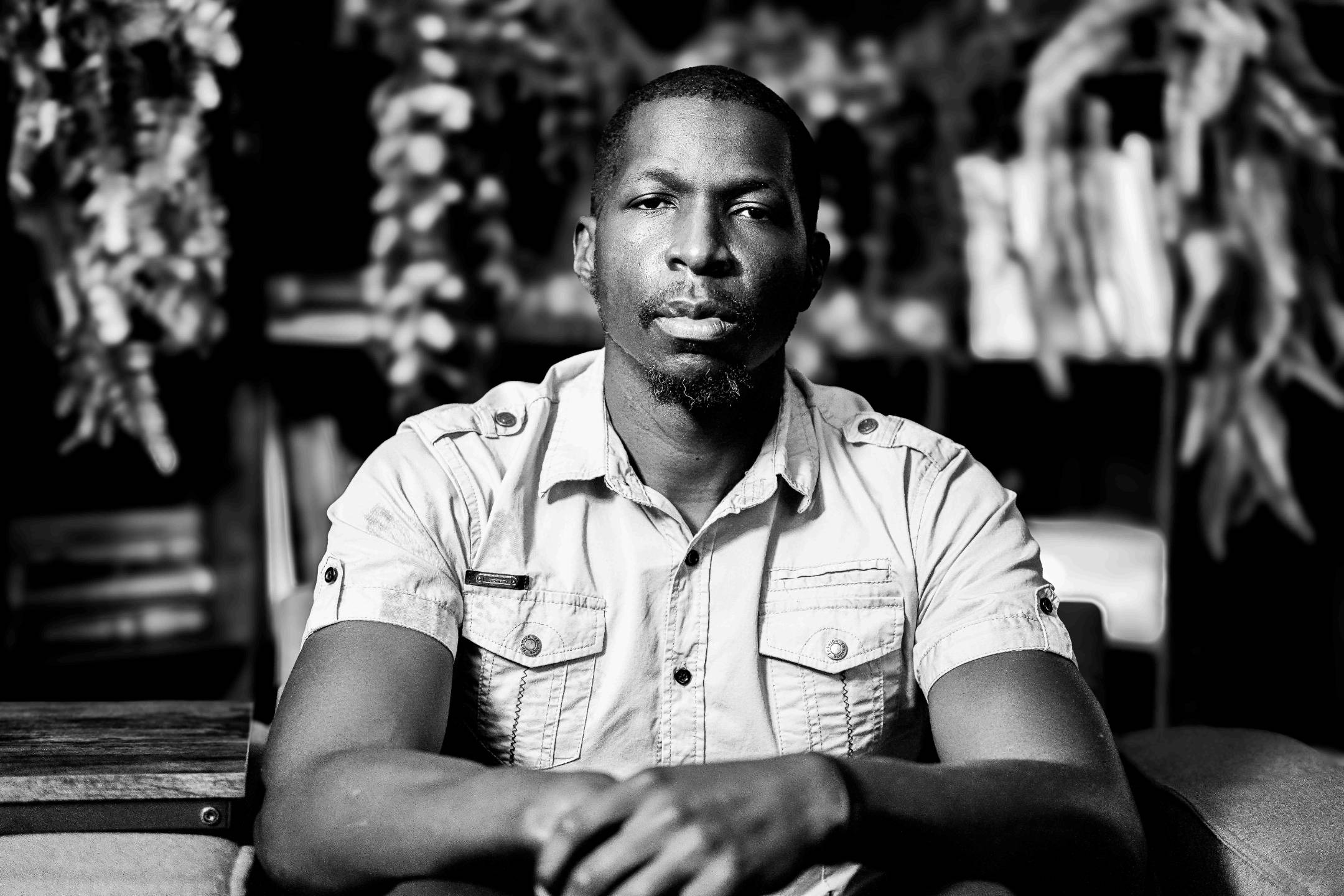
I Learned to Protect Everyone But Myself: When Childhood Trauma Becomes Purpose
Leo Louis
Long before Leo Louis became a community organizer, he was a little boy learning what it meant to protect the people he loved.
One of the earliest examples came after his parents separated. Leo remembers his mother telling him about a moment when she was crying in her room. He walked in, saw her hurting, and said something that would eventually sound much bigger than the words of a child: “Mama, don’t cry. I’ll take care of you.”
And in many ways, he did.
As Leo got older, protecting his family became less of a promise and more of a responsibility. He witnessed violence against his mother. He helped care for his younger siblings. He cooked, helped with homework, did laundry, and took on responsibilities that normally belonged to the adults around him. Eventually, when protecting his mother meant physically putting himself between her and danger, he did that too.
What started inside his home did not stay there.
That instinct followed Leo into adolescence, into the streets, into adulthood, and eventually into the community work he is known for today. When someone he cares about is in trouble, Leo moves. When he sees a problem affecting his community, he looks for a solution. When there is a burden that needs to be carried, he has often been willing to pick it up.
There is something admirable about that.
There is also a cost.
During our conversation, Leo acknowledged that there are times when his own development gets postponed because someone else needs him now. His goals can wait. His needs can wait. His plans can wait. There is another problem to solve and another person to help.
At one point, he described taking on responsibility because he felt somebody had to carry it.
That sentence stayed with me.
Because what happens when the person everybody can depend on becomes the person who continually comes last?
And what happens when that is not simply something you do, but part of who you have become?
After we finished recording, Leo asked me a question that changed the way I thought about our entire conversation.
“Is everybody supposed to heal from what they went through?”
The cameras were off, but in some ways, the conversation had just reached its deepest point.
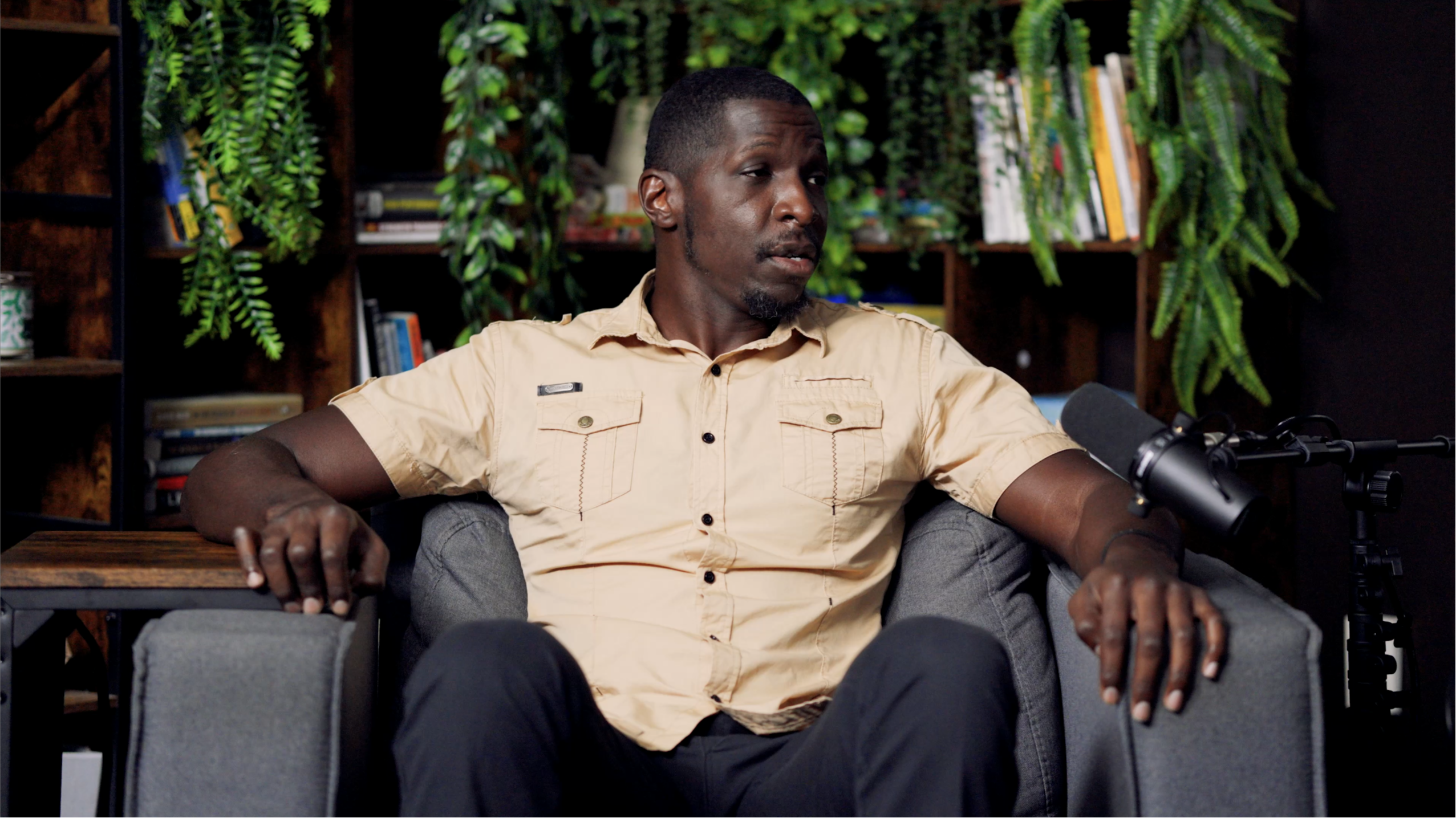
The Room We Clean: Self-Sacrifice
There is a difference between making a sacrifice and building an identity around sacrifice.
Most of us will have moments when someone we love needs more from us. Parenthood requires it. Relationships require it. Friendship requires it. Community requires it. There will be seasons when love looks like giving something up because another person genuinely needs you.
But what happens when sacrifice stops being something you occasionally choose and starts becoming the way you understand your value?
That is the room Leo’s story made me think about.
Sometimes the qualities that help us survive difficult experiences become some of the qualities we value most about ourselves. The child who had to become responsible may grow into an incredibly dependable adult. The person who knows what it feels like to go without may become the person who makes sure everybody has something. The person who was not protected may dedicate their life to protecting others.
We can look at that and see resilience.
We can also look at it and wonder about the wound underneath it.
And sometimes, it may be both.
That is what makes this room complicated.
If something painful helped shape something meaningful in you, healing can begin to feel almost threatening. You may wonder who you would become without the urgency, the responsibility, the anger, the sensitivity, or even the pain that has driven you for so long.
If I stop carrying everybody, am I becoming selfish?
If I learn to rest, will I lose my edge?
If I am no longer responding to the pain that shaped me, will I still care as much?
If nobody needs me today, do I like who I am when I am simply sitting with myself?
And maybe one of the hardest questions is this: How do I know whether I am still reacting to what happened to me or answering a call that what happened to me helped prepare me for?
I do not think those questions deserve simple answers.
Healing does not necessarily require us to throw away everything that grew from a painful place. But it may require us to examine what continues to drive us, especially when doing meaningful things repeatedly comes at our own expense.
Maybe the question is not whether we should stop caring.
Maybe the question is whether the wound has to remain open for us to continue caring the way we do.

Therapist Perspective
Leo asked me something after we stopped recording that I have continued thinking about.
“Is everybody supposed to heal from what they went through?”
My answer was yes, but I think we have to be careful about what we mean when we use the word healing.
Healing does not look the same for everybody. The care required is different because the wounds are different. I think about it similarly to an open wound on the body. Some wounds need stitches. Some need surgery. Some need to be cleaned and covered. Some need time. The treatment can look completely different, but healing still involves a process of closing what was once open.
The scar may remain.
That matters when I think about Leo’s story because I do not know that we can neatly separate his resilience from the experiences that helped shape it.
There is a temptation in mental health to look backward at every behavior that developed during adversity and label it a trauma response. I think we should be more thoughtful than that.
Something can develop because of what you experienced and still become a genuine value.
You can learn responsibility because responsibility was forced on you too early and still genuinely value being responsible. You can learn to protect because you once felt unprotected and still sincerely believe protecting people is part of your purpose. You can develop an awareness of suffering because you have suffered and decide to spend your life doing something about it.
The difficult question is not always, “Did this come from trauma?”
Sometimes the better question is, “What is driving it now?”
Purpose and compulsion can look almost identical from the outside.
You might spend your Saturday feeding people because service is deeply connected to your values.
Someone else might perform the exact same act because saying no makes them feel guilty, worthless, anxious, or afraid of disappointing people.
The behavior looks the same. The internal experience may be completely different.
That is why I keep coming back to another question: Who are you when nobody needs you?
Can you rest without feeling guilty?
Can you allow somebody else to solve the problem?
Can you take care of yourself without feeling like you have abandoned everyone else?
If you step away from your purpose temporarily, do you still like the person sitting in the room?
Those questions do not determine whether your calling is real. They may help reveal your relationship with it.
Maybe healing does not require Leo, or any of us, to become emotionally disconnected from the things we care about. Maybe you do not have to lose the fire that came from what you survived.
A healed wound can still leave a scar.
You can remember how you got it. You can allow it to influence how you move through the world. You can even dedicate part of your life to making sure somebody else never receives the same wound.
But the wound does not have to remain open for the lesson to remain alive.
Perhaps that is one way we distinguish between being controlled by what happened to us and making meaning from what happened to us.
Healing does not necessarily change what you are called to do.
It may change the place inside you that you are doing it from.
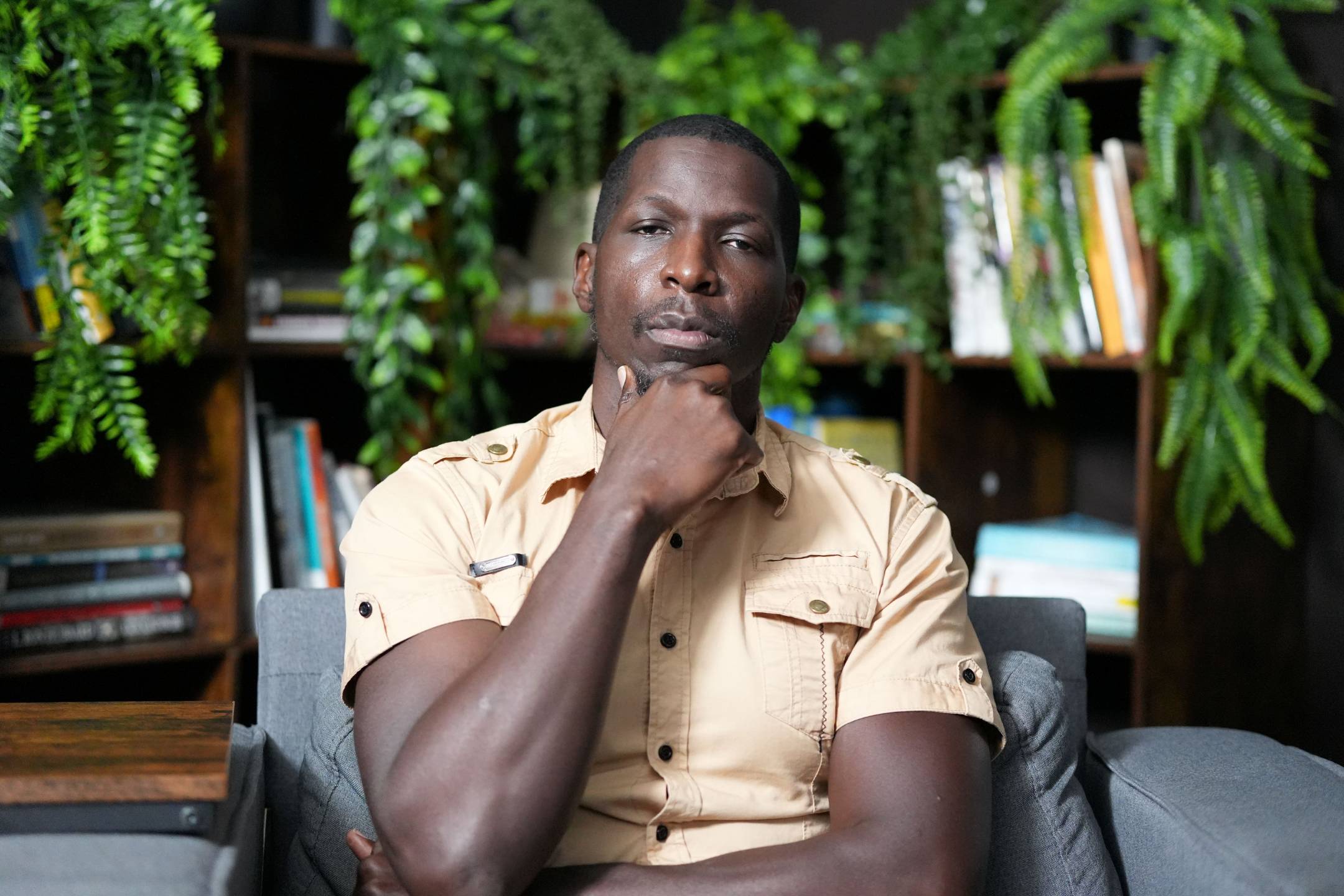
If You Recognize This Room
If you recognize yourself in this room, I would not immediately tell you to stop helping people, establish a bunch of boundaries, or walk away from the things you care about.
Instead, I would start by getting curious about your relationship with them.
Pay attention to what happens when you say no. If saying no creates overwhelming guilt, anxiety, fear of rejection, or a feeling that you are failing someone, there may be something worth exploring. The goal is not to become comfortable with never helping. It is to understand why not helping sometimes feels emotionally dangerous.
Practice allowing someone else to carry something. Not every problem you can solve is automatically your responsibility. The next time your instinct says, “I have to handle this,” ask yourself, “Do I have to, or am I choosing to?” That difference can tell you a lot.
Notice what happens when you rest. Give yourself time where you are not producing, rescuing, organizing, providing, fixing, or solving. Then pay attention to what surfaces. Peace? Guilt? Anxiety? Emptiness? Rest can reveal things that constant movement keeps quiet.
Separate your values from your wounds. Ask yourself why the work matters to you today, not only why it started. If you were no longer afraid, angry, ashamed, guilty, or trying to prove something, would you still care about this? If the answer is yes, there may be something deeper than survival holding that value in place.
Ask what the calling is costing you. Purpose can require sacrifice. That does not mean every sacrifice is healthy. Look at your relationships, physical health, emotional availability, finances, sleep, personal goals, and ability to receive support. Meaningful work should be examined when sustaining it repeatedly requires destroying the person doing it.
And finally, consider who you are without the role.
Not forever. Just long enough to answer the question.
Who am I when I am not the therapist, organizer, parent, provider, leader, fixer, strong friend, husband, wife, advocate, or person everybody calls when something goes wrong?
If taking away what you do makes it difficult to identify who you are, there may be another room worth cleaning.
None of these questions automatically mean your purpose is actually unresolved trauma. They are invitations to understand yourself more clearly.
Sometimes therapy can provide a place to explore that distinction without asking you to abandon the parts of yourself that you value. The goal does not have to be becoming someone who cares less.
Maybe it is learning how to care deeply without continually disappearing from your own life.
There is much more to Leo’s story than what I can capture here. In the full conversation, we explore where his instinct to protect began, what it has asked of him throughout his life, the losses that eventually forced him to stop, and what being “human first” is beginning to mean for someone who has spent so much of his life showing up for everybody else.
When you clean your room, you can change your life.
Payton Hogan MS, LIMHP